Problem
Frontier’s digital products had been built over time from a mix of legacy components, custom UI and older versions of MUI. They worked, but they created inconsistencies across the MyFarm products and made a unified experience hard to maintain.
At the same time, a full rebrand introduced a new visual identity and a newly built corporate website. The product ecosystem stayed disconnected from this new direction, both visually and structurally.
The challenge was to bridge that gap: evolve the existing design system into a single source of truth that could carry the new brand, align product and web, and give design and development a foundation that scales.
That meant more than a new visual layer. It needed a structured system of tokens and variables, aligned with a modern MUI implementation, so it could roll out consistently across every product.
My role
I led the design system’s evolution after the rebrand and created one foundation across products and web. Working across design and development, I brought structure, consistency and scalability to an existing system while product delivery carried on.
- Design system evolution. I took ownership of the system after the initial agency work and grew it into a scalable, production-ready system aligned with the new brand.
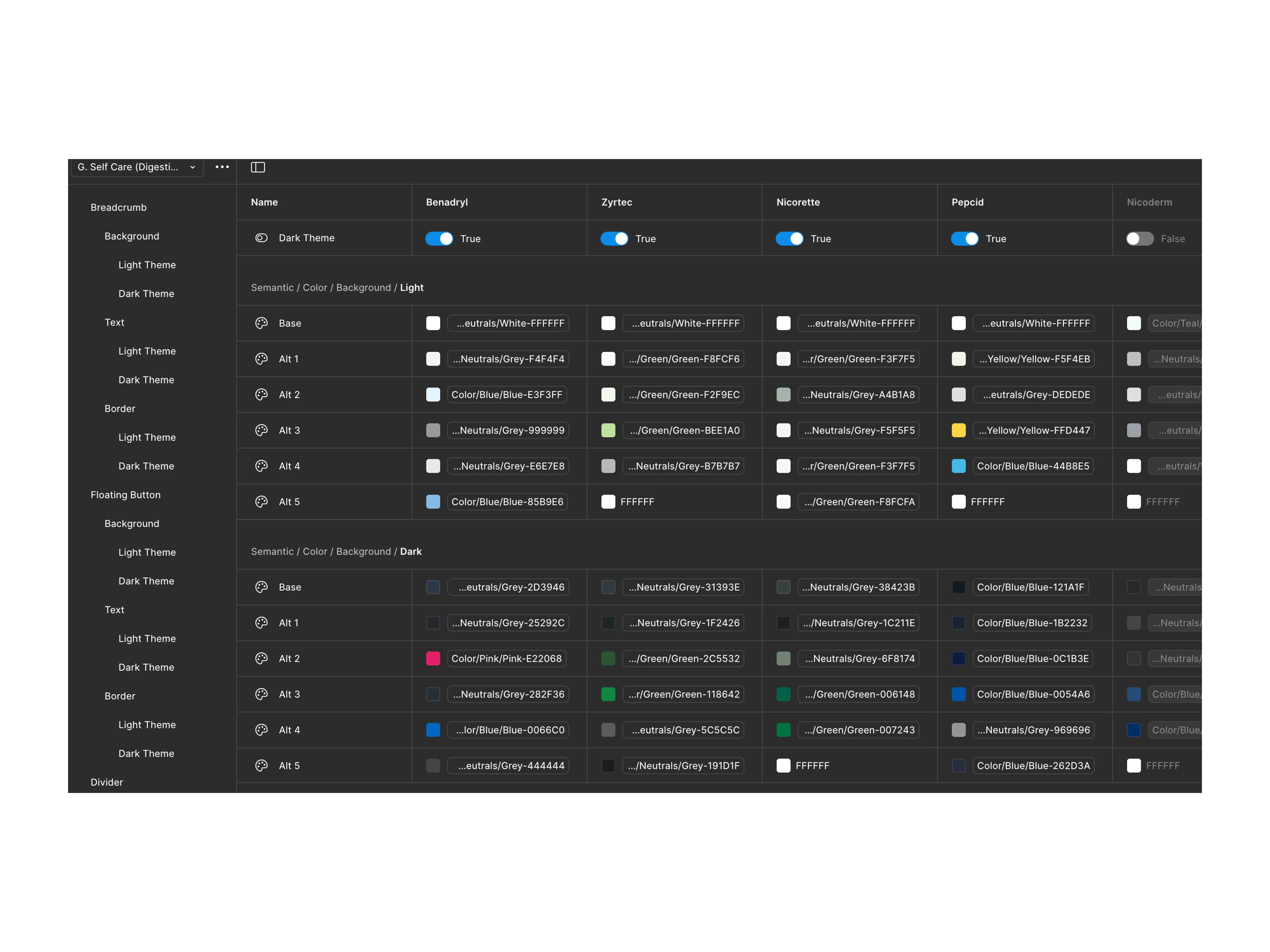
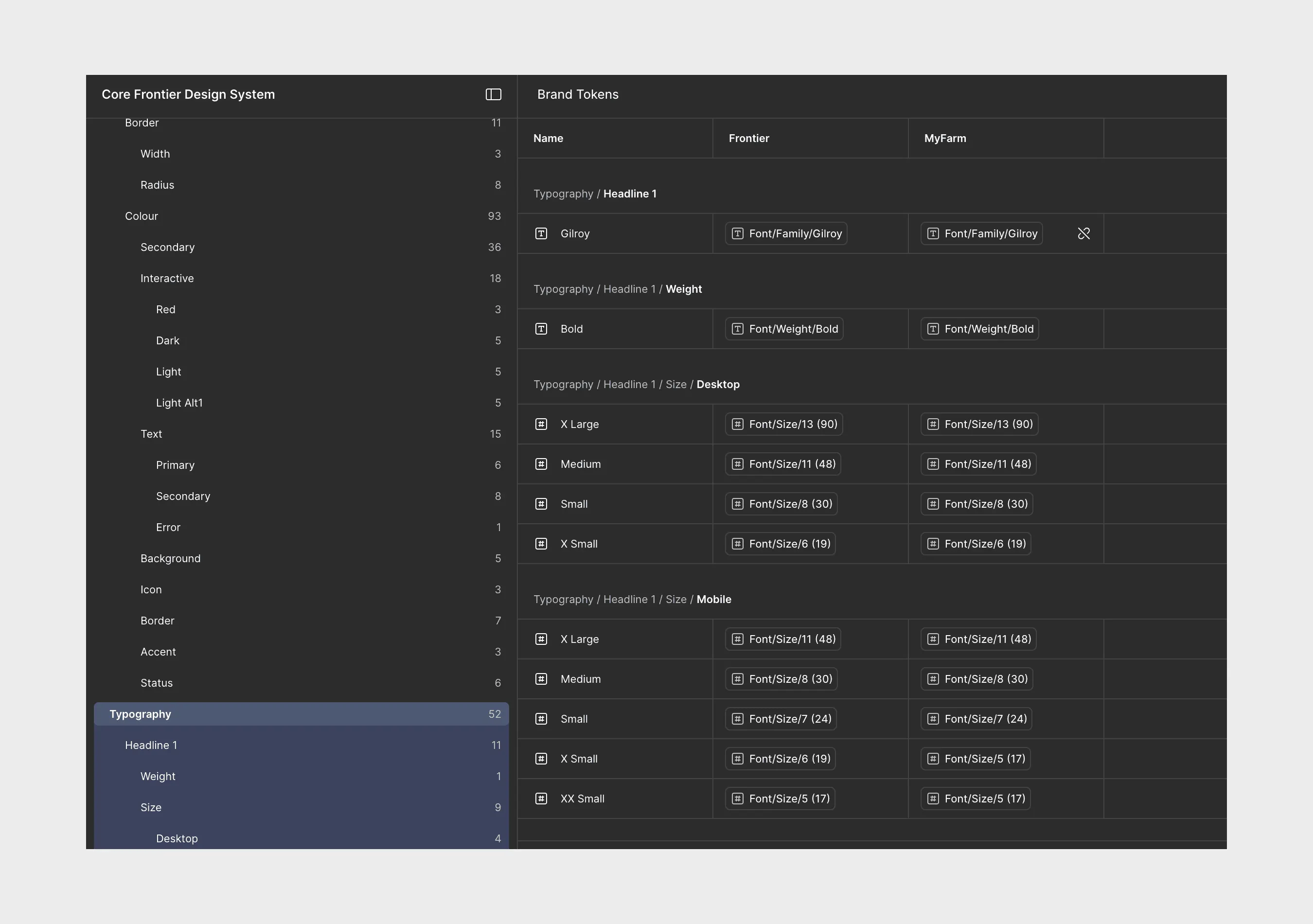
- Token and variable architecture. I defined a structured set of design tokens, with primitive and semantic layers, using Figma variables as the single source of truth for colour, typography, spacing and more.
- MUI integration. I adopted the latest MUI library as the base, mapped the tokens to component styles and kept design and development consistent.
- Component standardisation. I consolidated legacy and custom components into a reusable system, improving consistency across key areas such as the MyFarm dashboards.
- Responsive system design. I introduced consistent breakpoints, layout rules and responsive behaviour across devices.
- Cross-functional collaboration. I worked closely with developers and stakeholders so design decisions matched what could really be built and adopted.
- Supporting delivery. I applied the evolving system directly in live product work, balancing system improvements with real delivery needs.
Approach
To evolve the system in a way that scales and stays maintainable, I focused on five foundations: tokens, component architecture, development alignment, responsiveness and governance.
1. A token-driven foundation
- Defined primitive tokens for colour, typography, spacing and radius.
- Introduced semantic tokens for flexibility and reuse across products.
- Implemented the tokens as Figma variables, applied consistently across components and layouts.
- Made sure the tokens could map to development for the long term.
This moved the system from static styles to a scalable, themeable foundation.
2. Alignment with MUI
- Adopted MUI components as the base layer.
- Mapped design tokens to MUI’s theming structure.
- Balanced customisation against standardisation to avoid needless divergence.
- Made sure Figma components reflected real implementation patterns.
This reduced friction between design and development and improved handoff.
3. Components and reuse
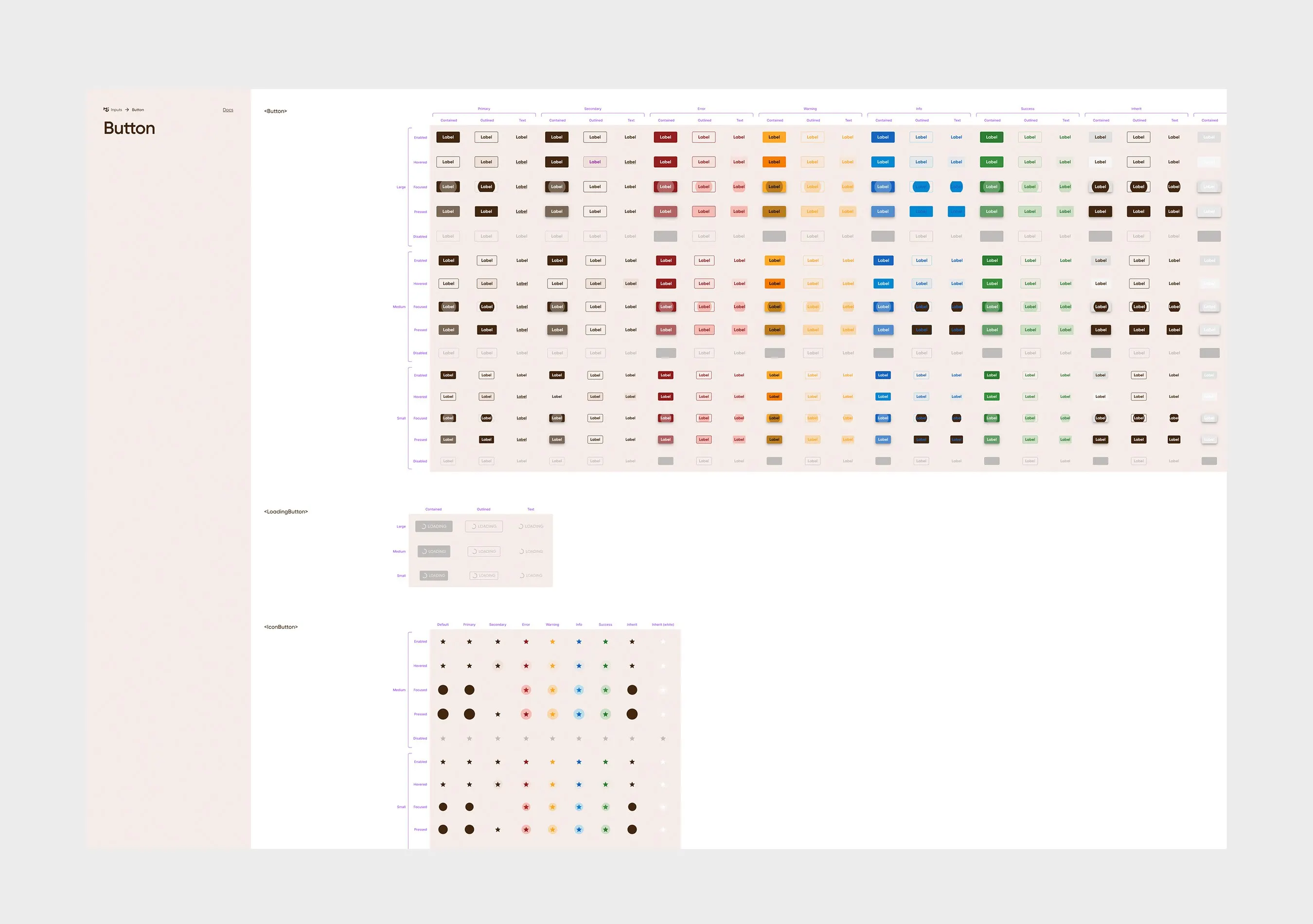
- Standardised core components such as cards, layouts and navigation patterns.
- Introduced slot-based thinking for flexible content.
- Reduced duplication with clear variants and usage patterns.
- Designed components against real product use cases, such as the MyFarm dashboards.
4. A responsive system
Responsiveness was treated as part of the system, not an afterthought.
- Defined breakpoints and layout rules aligned with MUI.
- Designed components to adapt structurally, not just visually.
- Applied the patterns across dashboards and key product pages.
5. Governance and adoption
- Worked closely with developers to validate feasibility and alignment.
- Introduced structure around how components and tokens are used.
- Balanced system improvements with ongoing delivery.
This helped move the system from a design asset to a real product foundation.
Key work
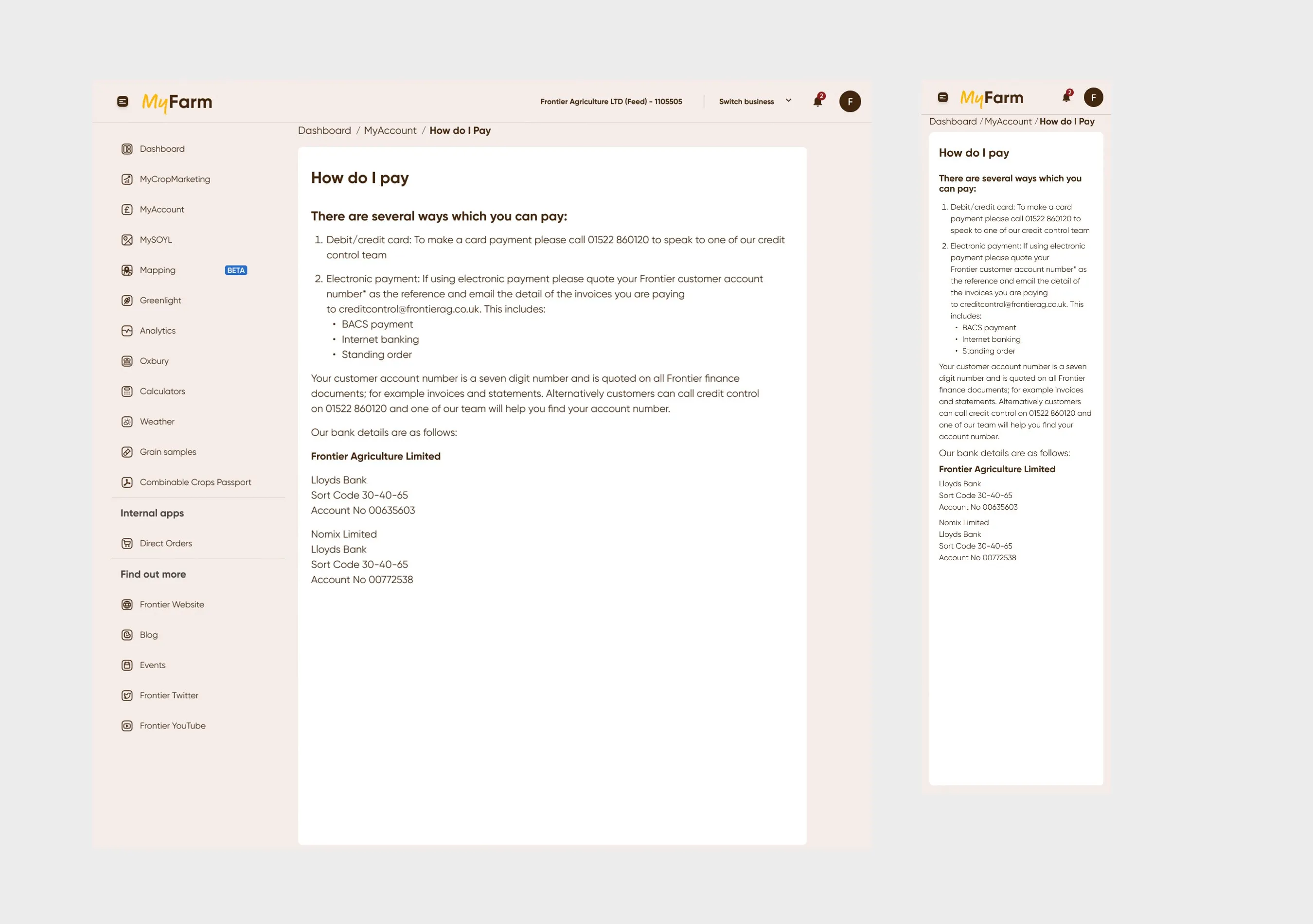
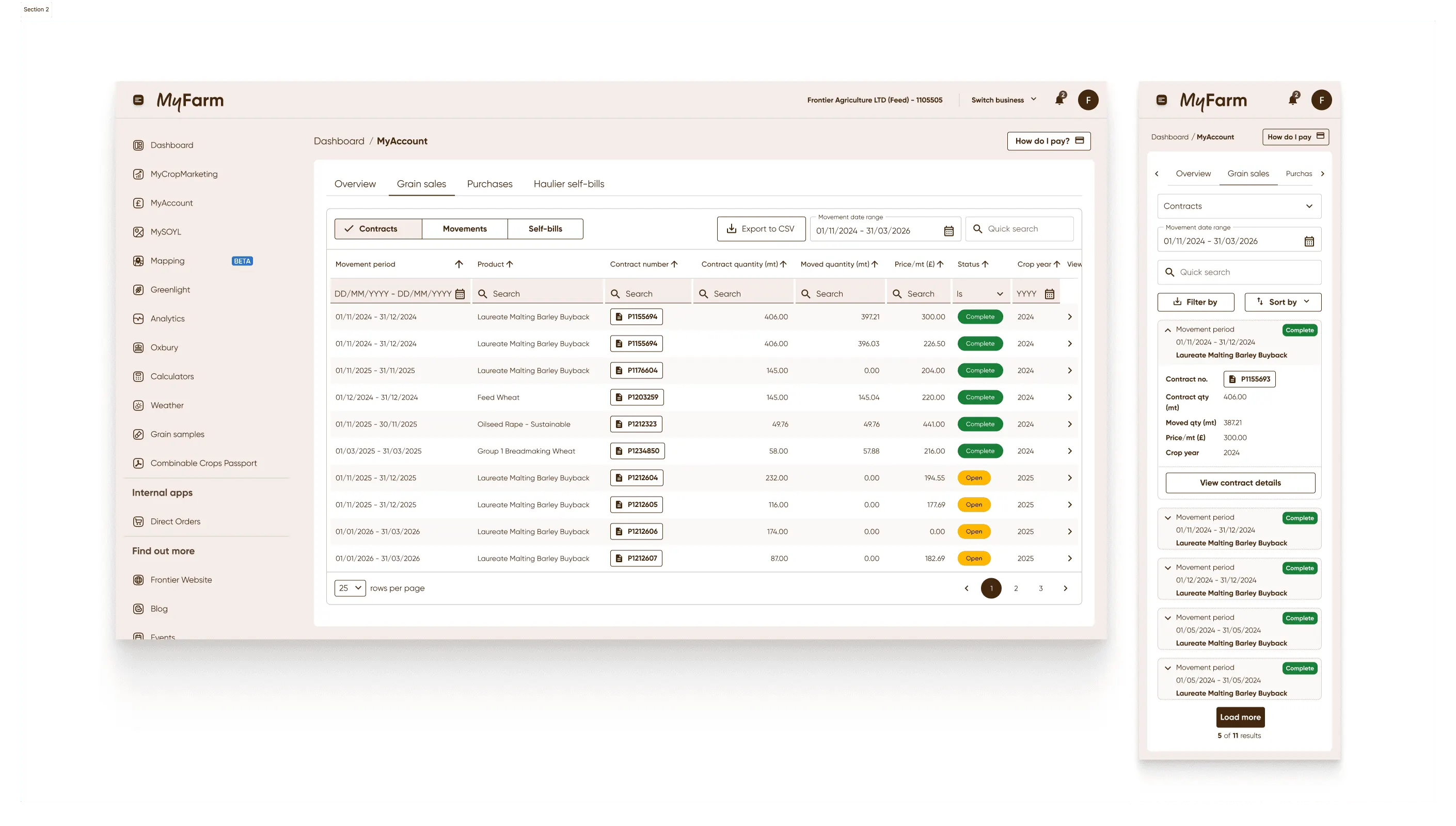
MyFarm dashboard
Rebuilt with system components and tokens, turning a fragmented UI into a consistent product experience that scales.
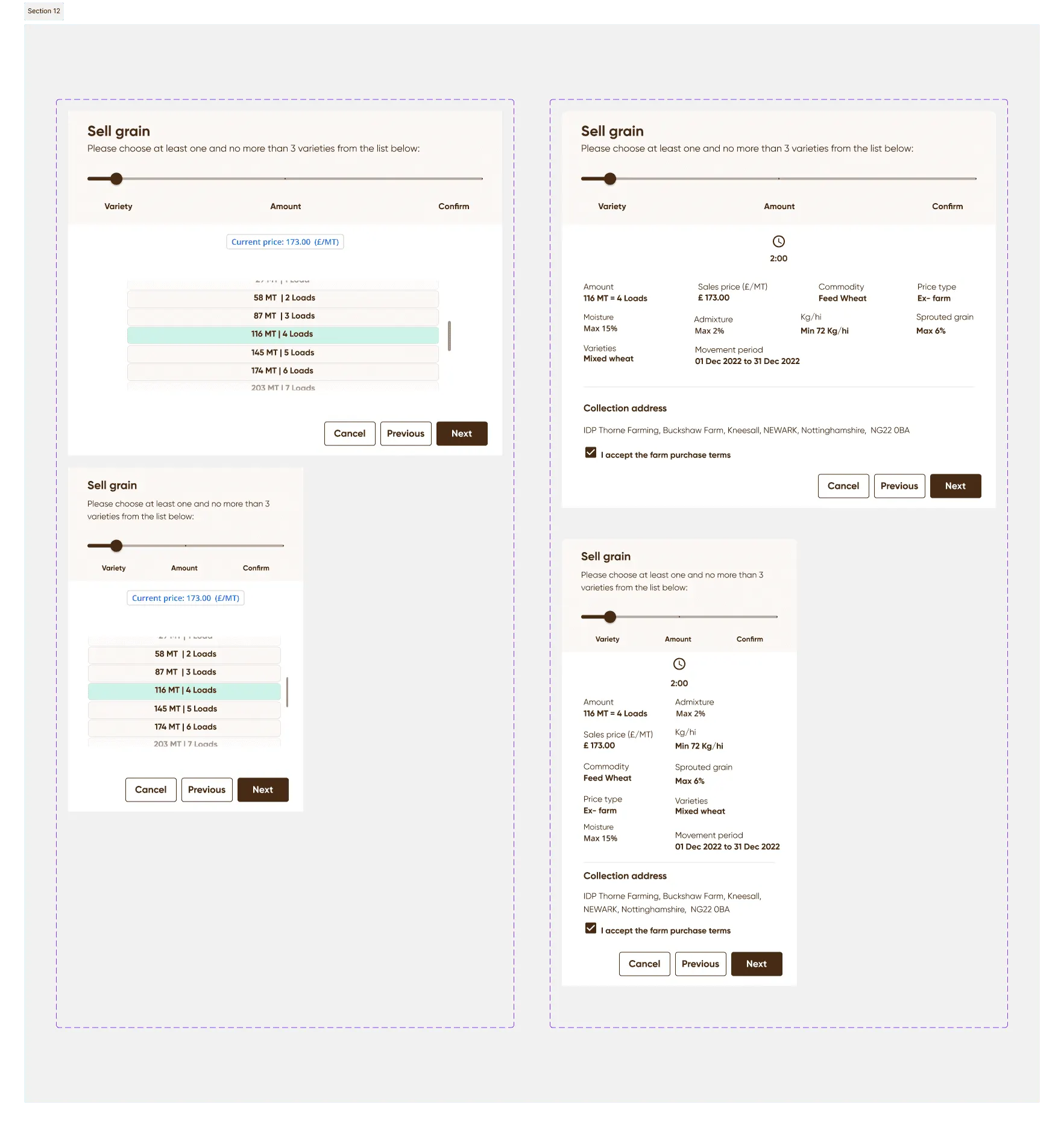
Component system
Standardised core patterns, less duplication, and reusable, flexible components across products.
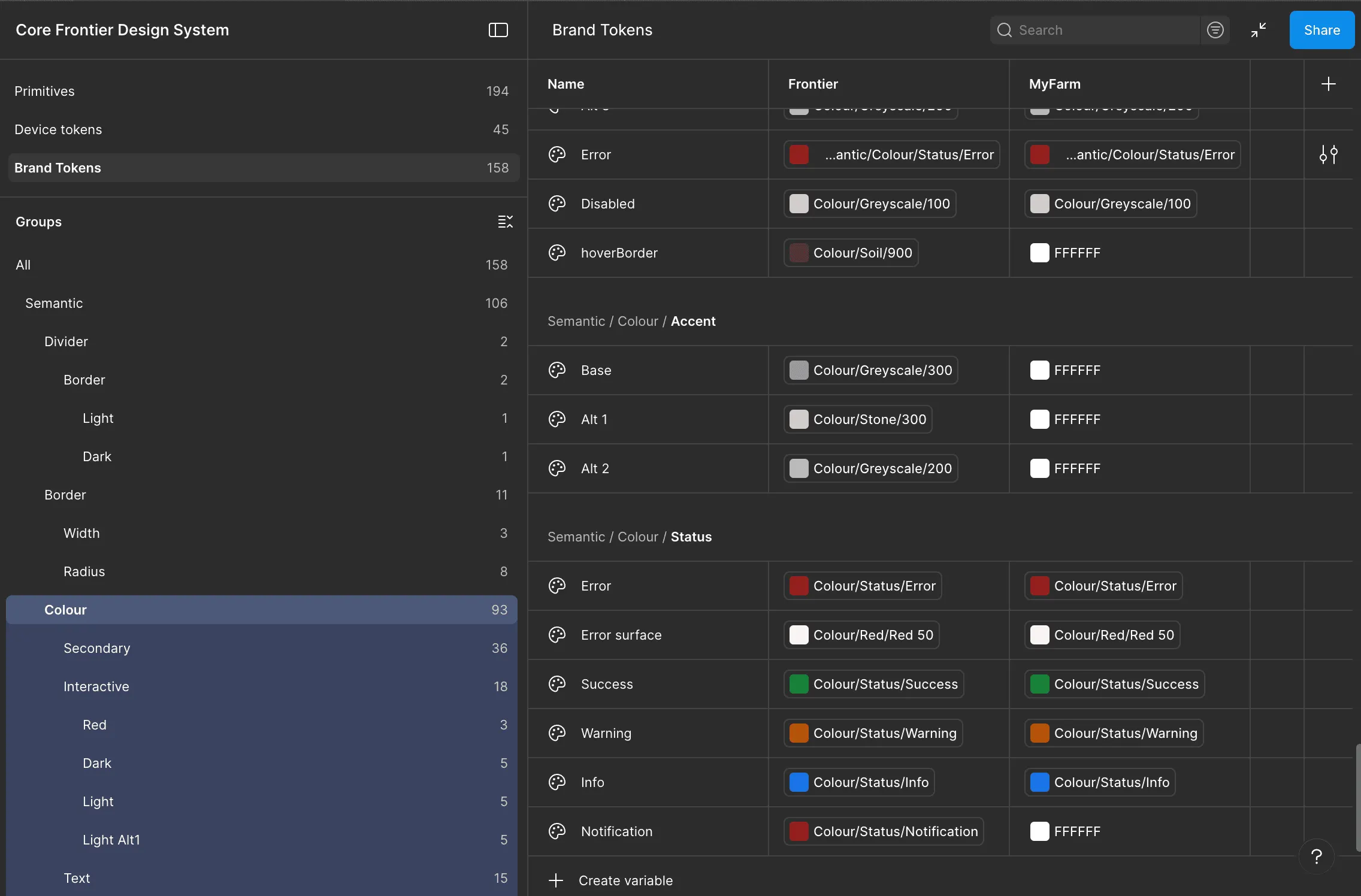
Tokens and MUI integration
A token-driven foundation aligned with MUI: one source of truth for design and development.
Challenges
Evolving the system wasn’t a clean rebuild. It meant working within real constraints.
- Legacy complexity. Products used old components, custom UI and different MUI versions, so standardisation had to be gradual.
- Rebrand plus live product pressure. The system had to carry an active rebrand while features kept shipping.
- Design and development alignment. Turning tokens, components and patterns into code needed close collaboration without fully mature tooling.
- Adoption across teams. Adding structure without slowing teams down meant balancing the ideal system with practical implementation.
Impact
The work gave Frontier’s digital ecosystem a stronger foundation that scales.
- Unified design direction. Products and the corporate website now share one consistent visual system.
- Single source of truth. Tokens and variables give design and development a shared foundation.
- Improved consistency. Standardised components reduced UI fragmentation across products like MyFarm.
- Better design and development alignment. MUI integration and token mapping improved handoff and implementation.
- Ready to scale. The system is set up for future growth, reuse and potential white-labelling.
Reflection
This project reinforced that a design system is an evolving product, not a static library.
Working inside an existing ecosystem showed the value of incremental change, of keeping design decisions close to development, and of validating the system through real product use.
With more time, the next steps would be:
- Stronger governance and contribution models.
- More documentation and adoption across teams and products.
- Tokens fully wired into the development pipeline, for example Storybook and automation.