Problem
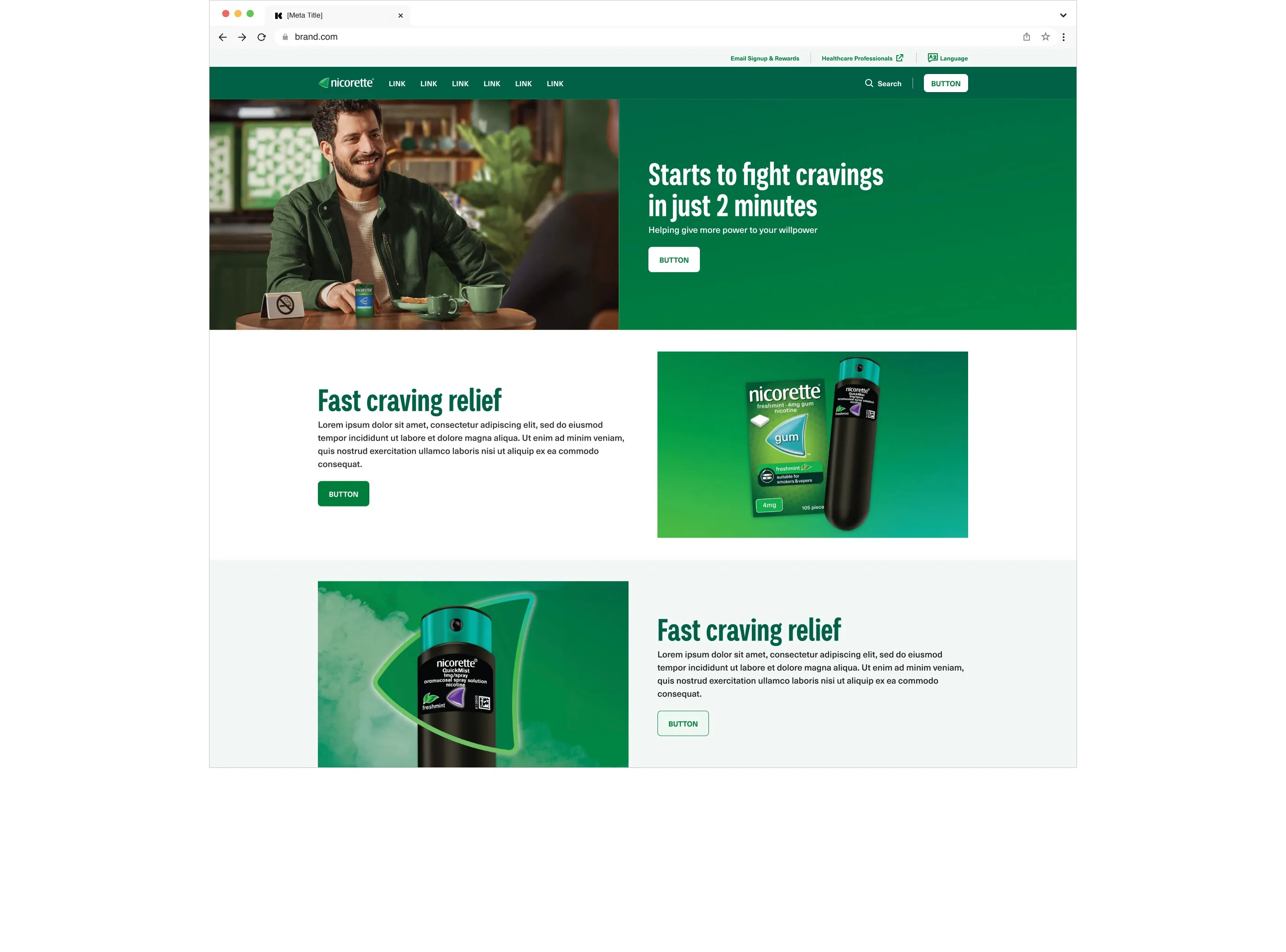
Kenvue’s digital ecosystem was split across legacy platforms, mainly Canvas, which powered more than 80 consumer brands and 700+ websites worldwide. Each brand site was built and maintained on its own, which led to:
- Inconsistent experiences and visual design across markets and brands.
- High development effort and duplicated work.
- Limited accessibility compliance, especially for CTAs and brand colour schemes.
- Slow speed to market for campaigns, updates and new sites.
- No central governance or scalable design assets.
With a broad portfolio and a push for a more cohesive global presence, we needed a unified design system that improved scale, consistency and accessibility, while leaving room for local and brand-specific needs.
Approach
To build a system for 80+ brands and 700+ websites, we took a highly collaborative, modular approach.
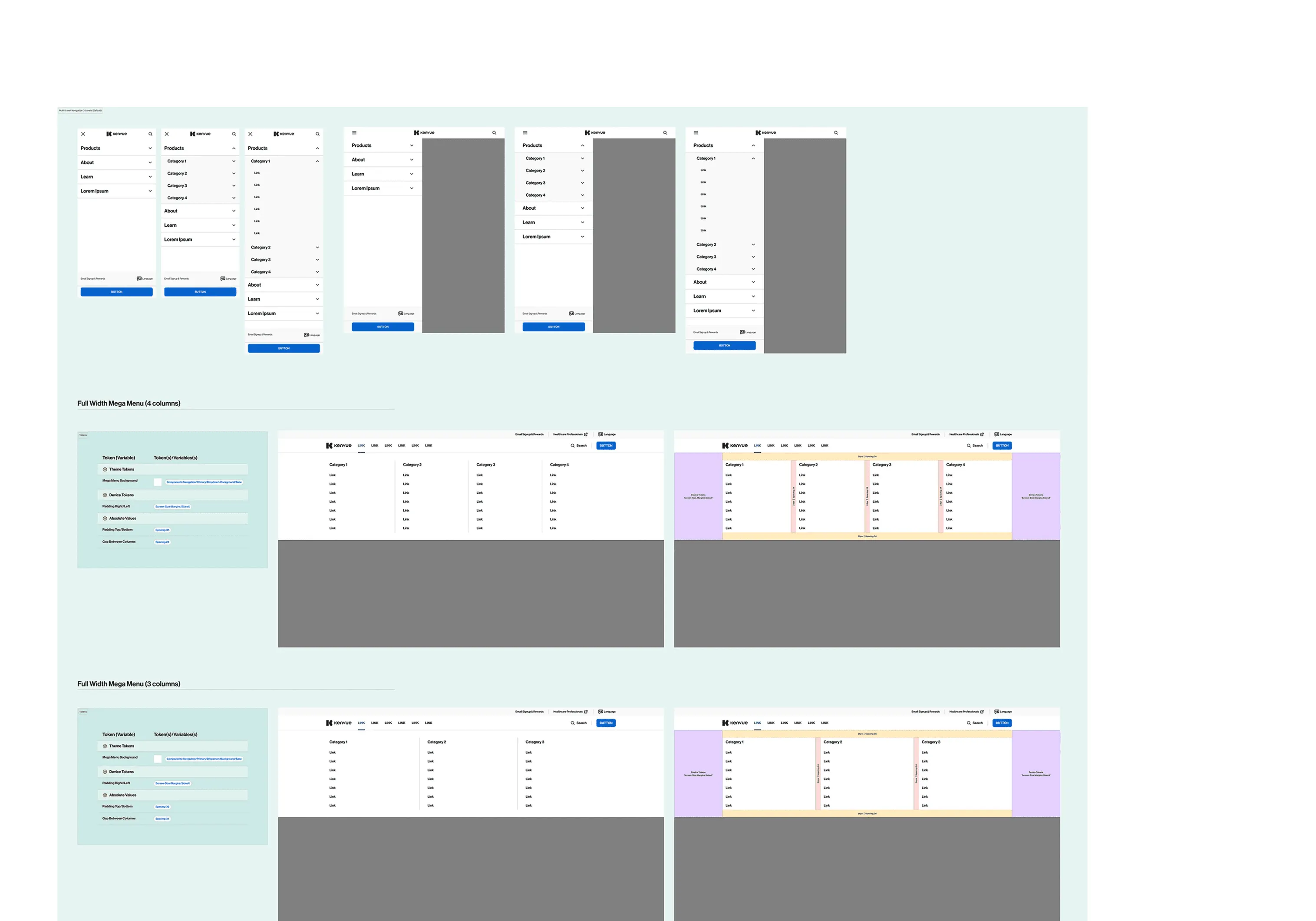
- Built in Figma. We designed the whole system in Figma, using its newest features (variables, modes and collections) for brand flexibility and efficiency.
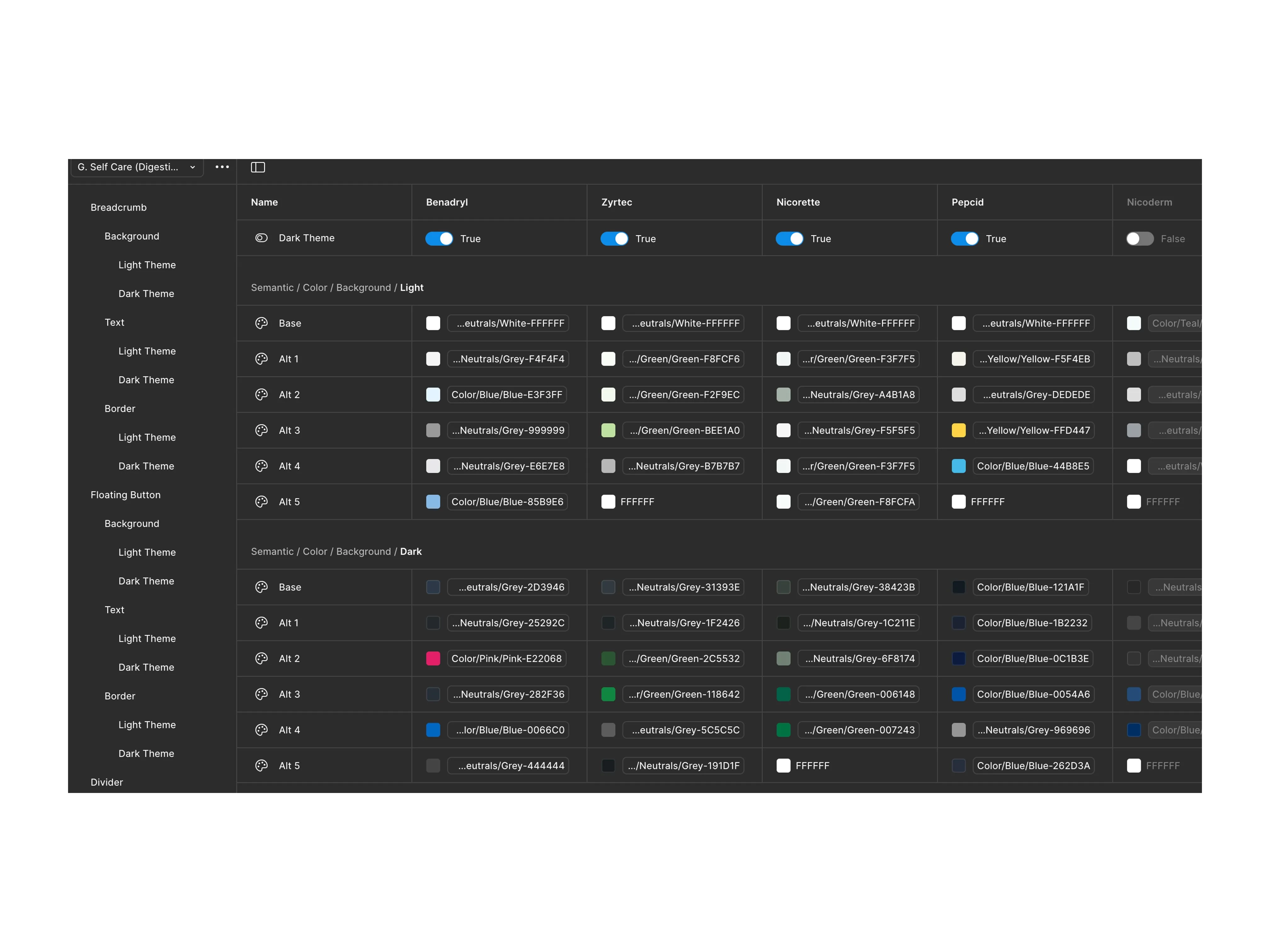
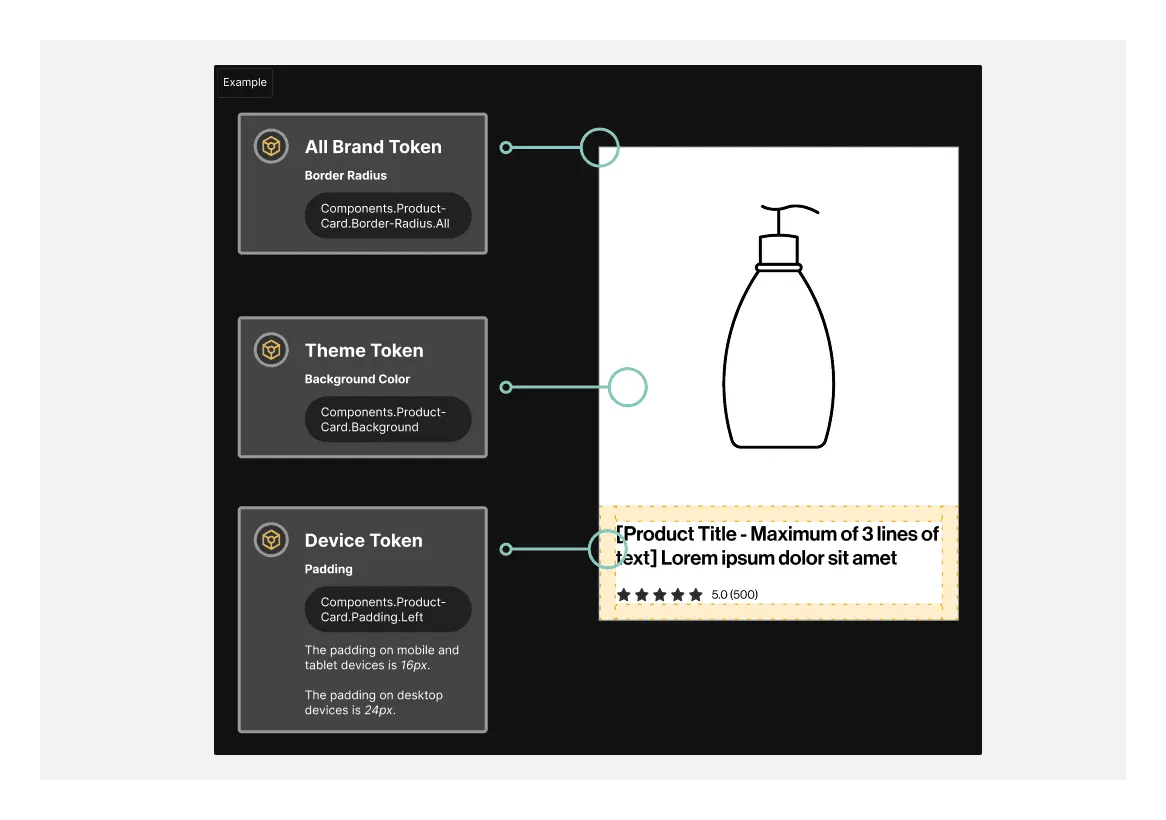
- Early adopters of Figma variables. As one of the first teams to use token variables at this scale, we created more than 50 brand configurations, each with its own colour tokens and primary CTA styles. Every brand kept its identity inside one system.
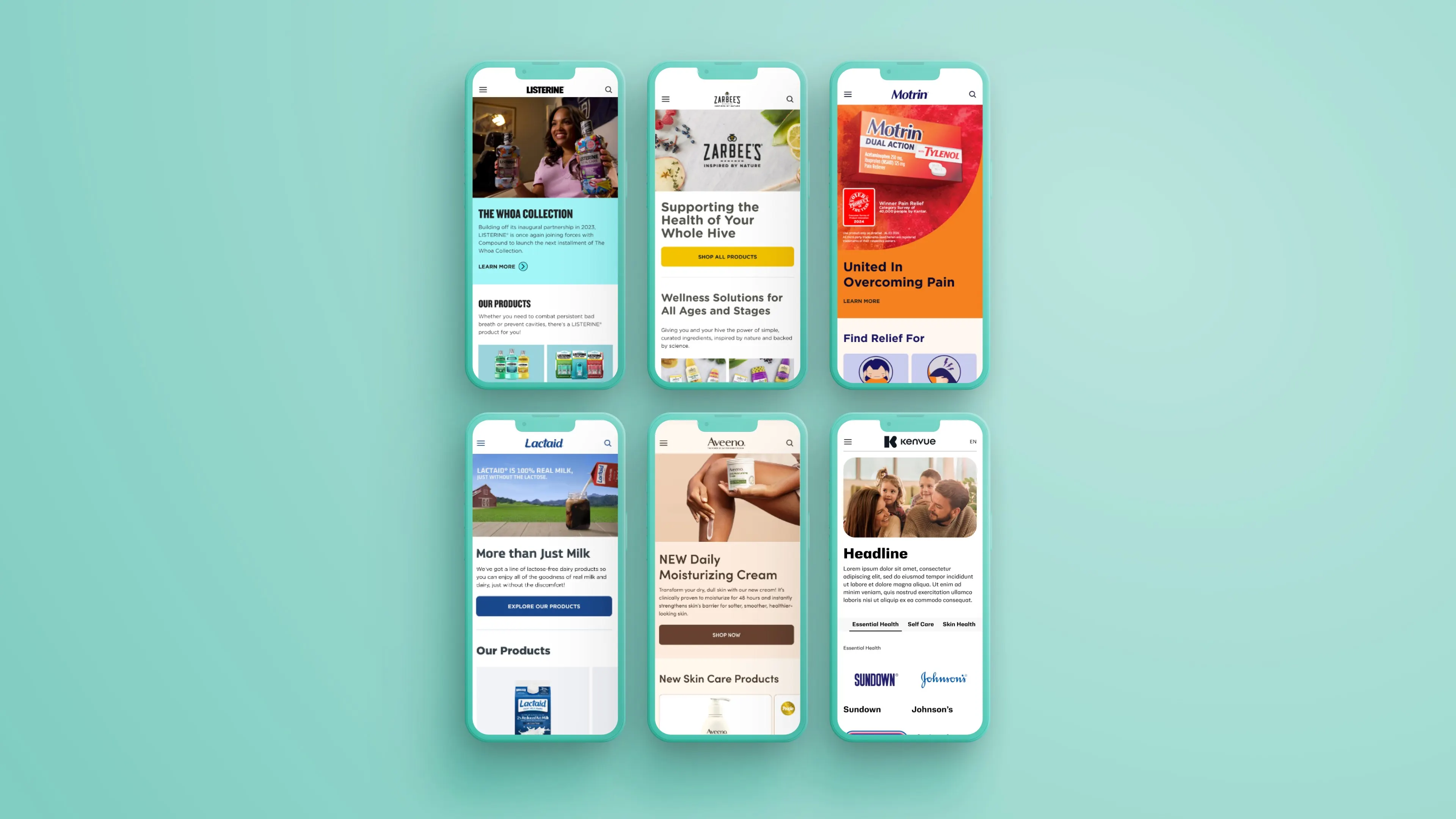
- Market variations. Some brands, like Ipren and Listerine, needed market-specific colours and visuals to match packaging or local preferences. The system handled these while staying globally consistent.
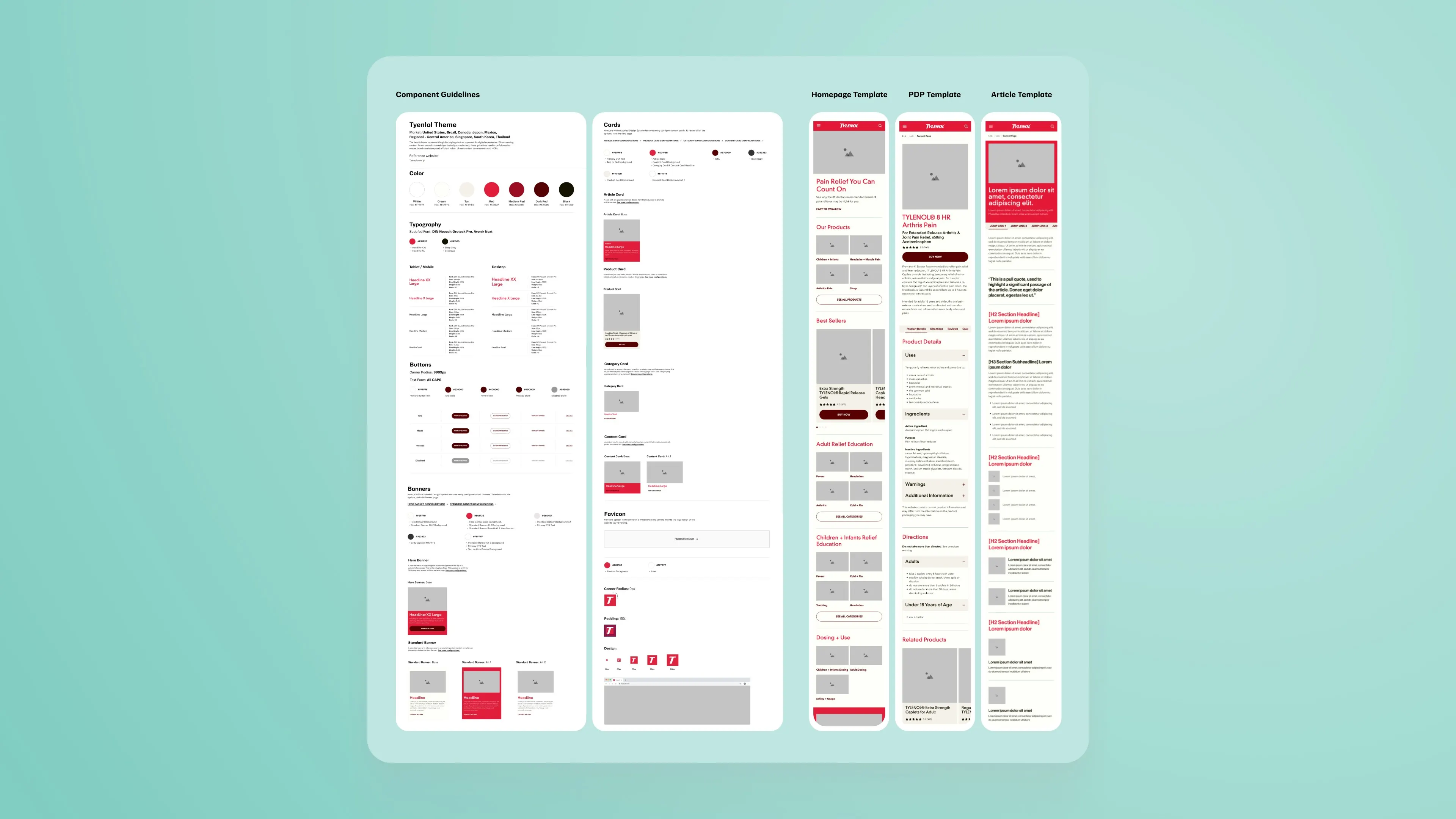
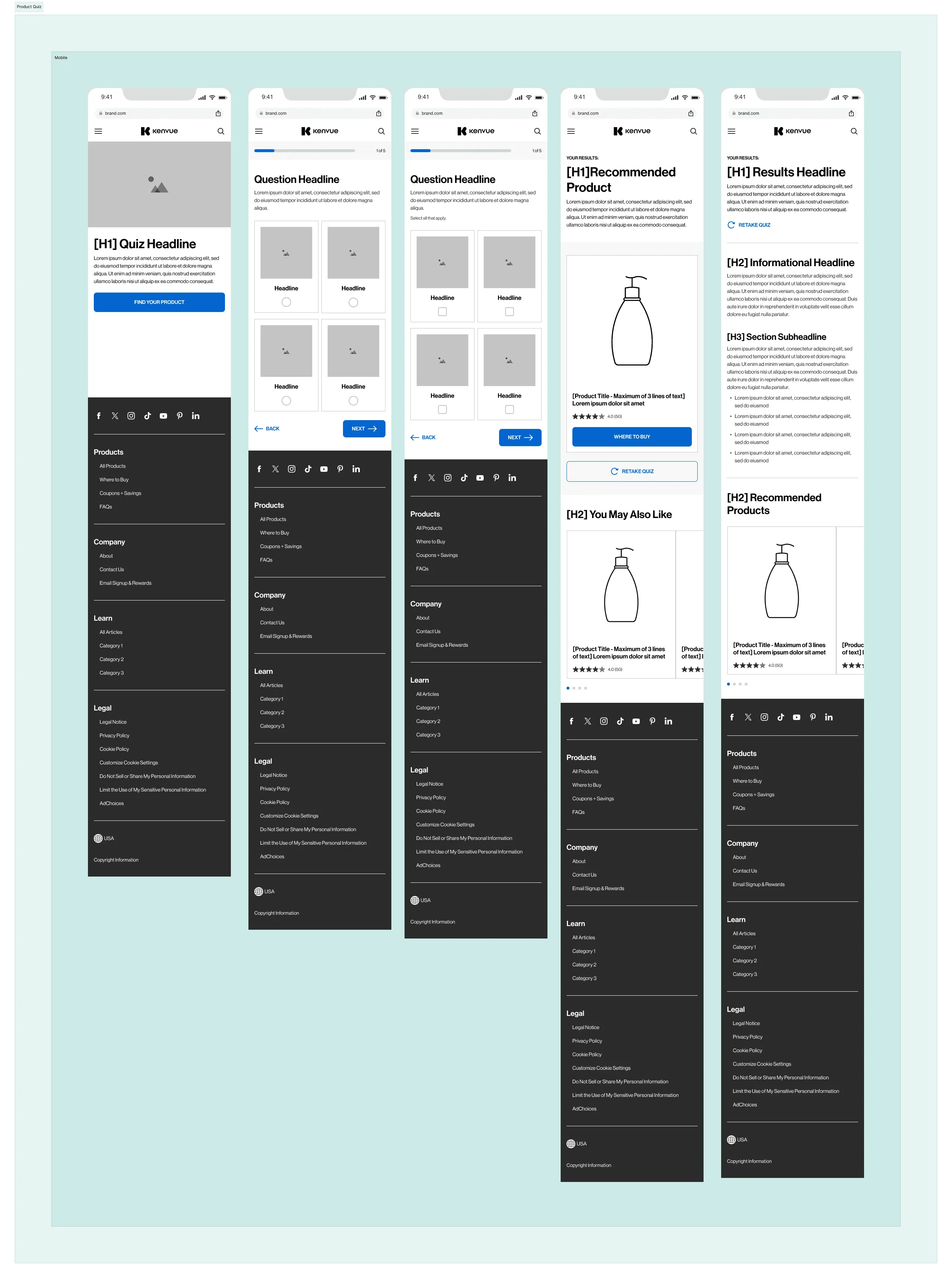
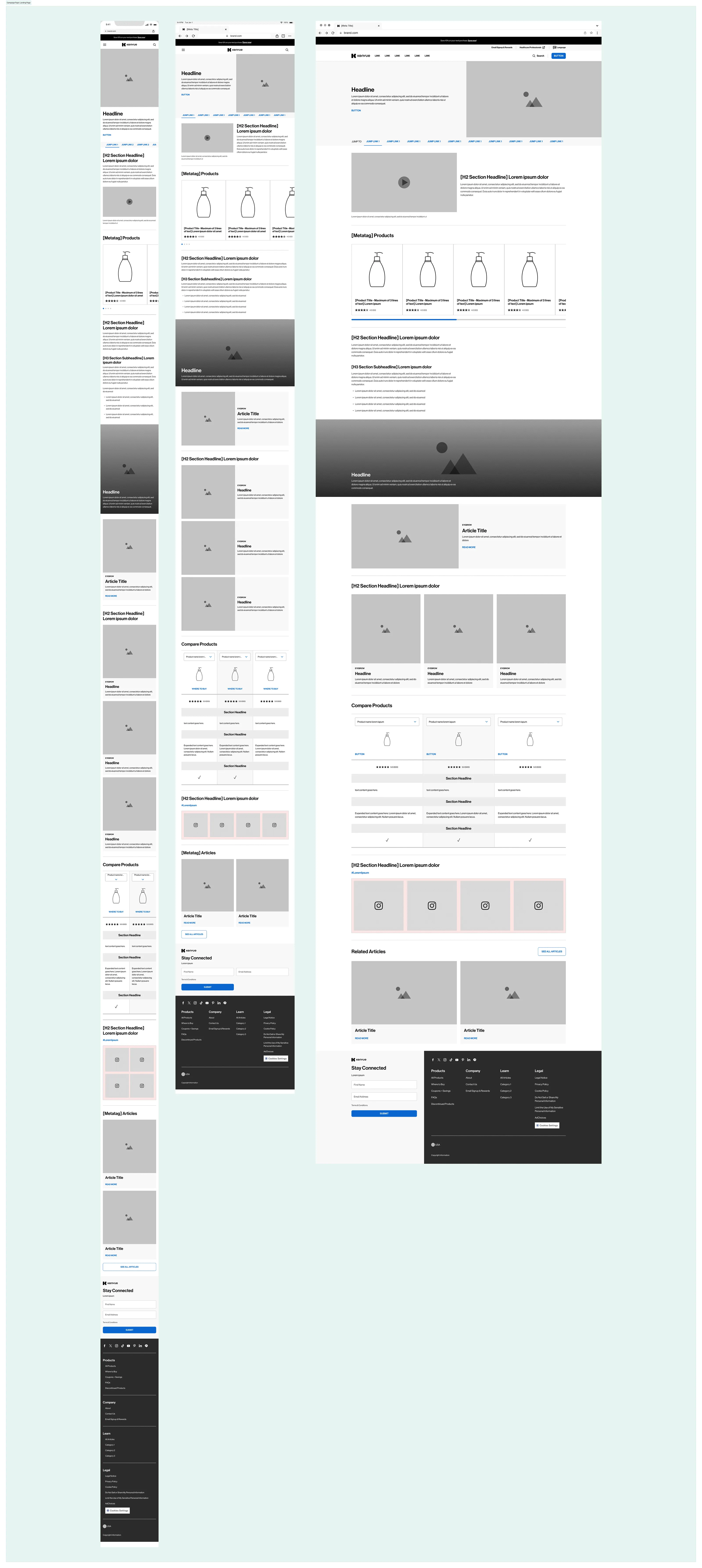
- Component-based architecture. Reusable, flexible components that work across all brands and use cases.
- Accessibility first. WCAG AA compliance from the ground up: contrast, interaction states and screen reader support.
- Responsive layouts. Mobile-first patterns that scale from small screens to large desktops.
- Cross-functional alignment. Regular feedback loops with global brand, content and engineering teams for adoption, performance and accuracy.
Outcome
- Unified design language. One scalable system now supports 80+ brands and 700+ websites, with simpler governance and less design and development effort.
- Brand adoption. We migrated our sites to the new DxP across markets, with the design system as the foundation for the digital transformation.
- Efficiency gains. Local teams launch brand pages faster with pre-approved, accessible components and templates.
- Improved accessibility. All components and templates meet WCAG AA.
- Consistent branding at scale. Despite many brands and regional variations, design stays consistent and high quality across markets.
- Figma at scale. One of the most extensive uses of Figma variables and modes, with theming, CTA variations and colour overrides for more than 50 brands.
- Dedicated brand workspaces. Planned Figma workspaces per brand, so teams can iterate with brand typography, themes and templates, all connected to the master system.
- Agency and partner enablement. Templates and branded components shared with external partners, so agencies work faster and stay on brand.
Impact at scale
On the Rogaine website, UI updates also brought 5% more daily purchases from the product listing page, and 35% of orders are now subscriptions. Every brand has clear digital guidelines and branded templates.
Reflection
I worked with global teams to co-create a design system that moved 80+ brands and 700+ websites, including Nicorette, Calpol, Listerine, Neutrogena and Aveeno, onto one accessible Digital Experience Platform.
As UX lead for EMEA, I’m proud of the part I played in this global collaboration. It was a milestone project, and it’s rewarding to see it drive consistency, accessibility and speed at scale.