The problem
Planning a wedding means a long list of jobs spread over a year or more, two people, a budget and a lot of suppliers. Couples end up juggling spreadsheets, notes, group chats and inbox searches. It’s easy for something important to slip, or for one partner to end up carrying all of it.
I wanted one calm place that knows what needs doing and when, and that is built for two people from the start. It had to be useful without the hype: no “magical journey”, just a clear plan.
My role
PlanJolly is my own product, so I did all of it: product direction, UX and UI, the design system, brand voice, the React Native app, the backend, the App Store and Google Play releases, the website and the launch.
AI agents, mainly Claude Code, were my engineering, research and QA team. The product decisions, the design and the final call on every release stayed with me.
How I ran it
Before any screens, I did the groundwork: user research, a written spec, clear goals and a roadmap. The roadmap then ran the project. It split the work into a handful of big phases, from the technical foundations and the design system, through the screens and features, to launch, and I followed it closely, one phase at a time.
The plan also got better as I went. When I learned something, it became part of how the app was built from then on. Accessibility moved from a final check to a rule for every screen. All the in-app copy moved into its own files, kept apart from the code, so adding a language means new files, not a rewrite.
My first app, all the way to the stores
PlanJolly is the first app I’ve taken from design all the way to the App Store and Google Play, so the project was also how I learned the whole process and every building block in it. Alongside the design and the build came the technical decisions, the store assets, compliance and app review, and the marketing around launch: the website and the first social media posts. Managing all of those steps, with a lot of back and forth and a lot of decisions, was a big part of the work, and of what I learned.
Approach
1. Built around the date
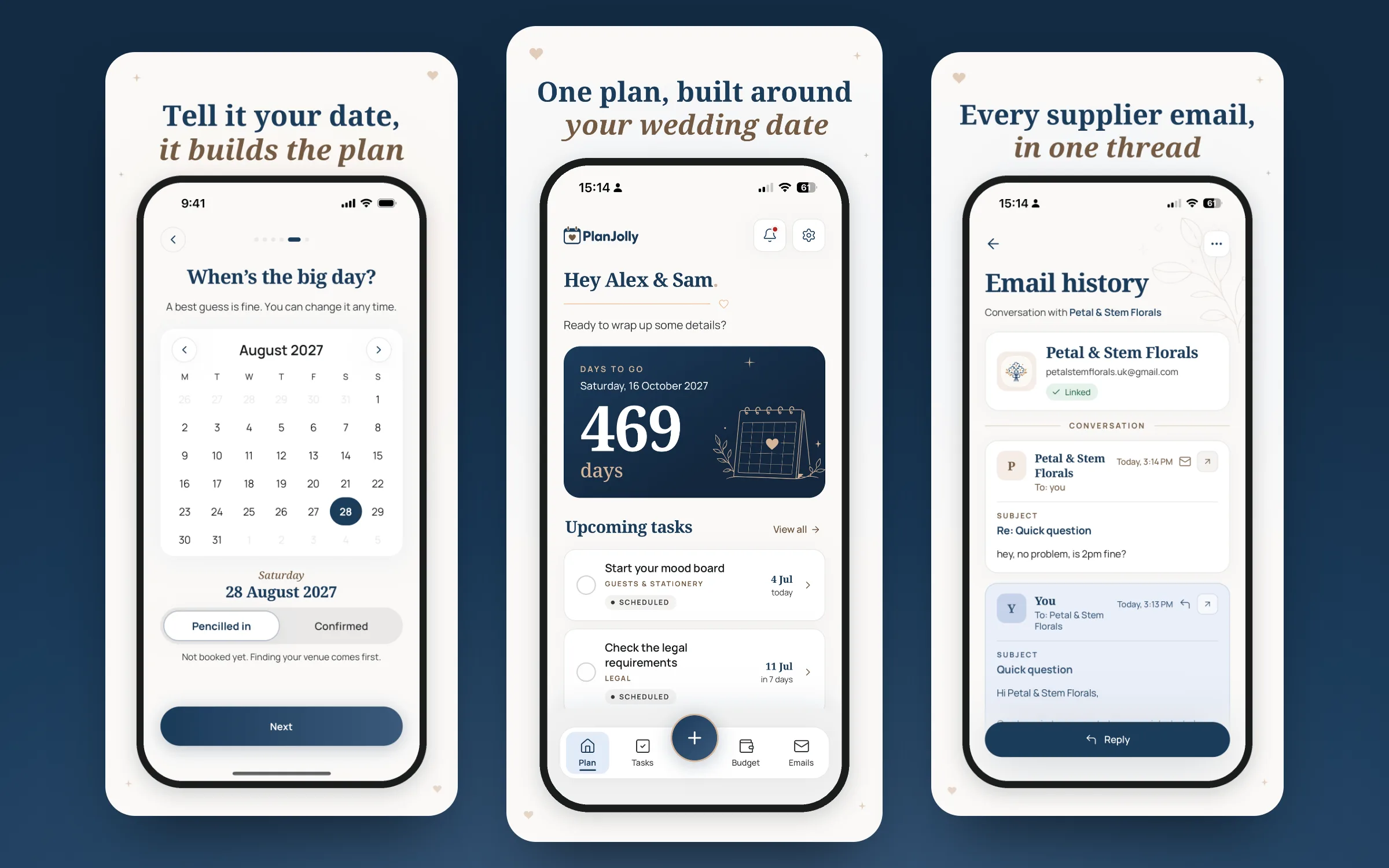
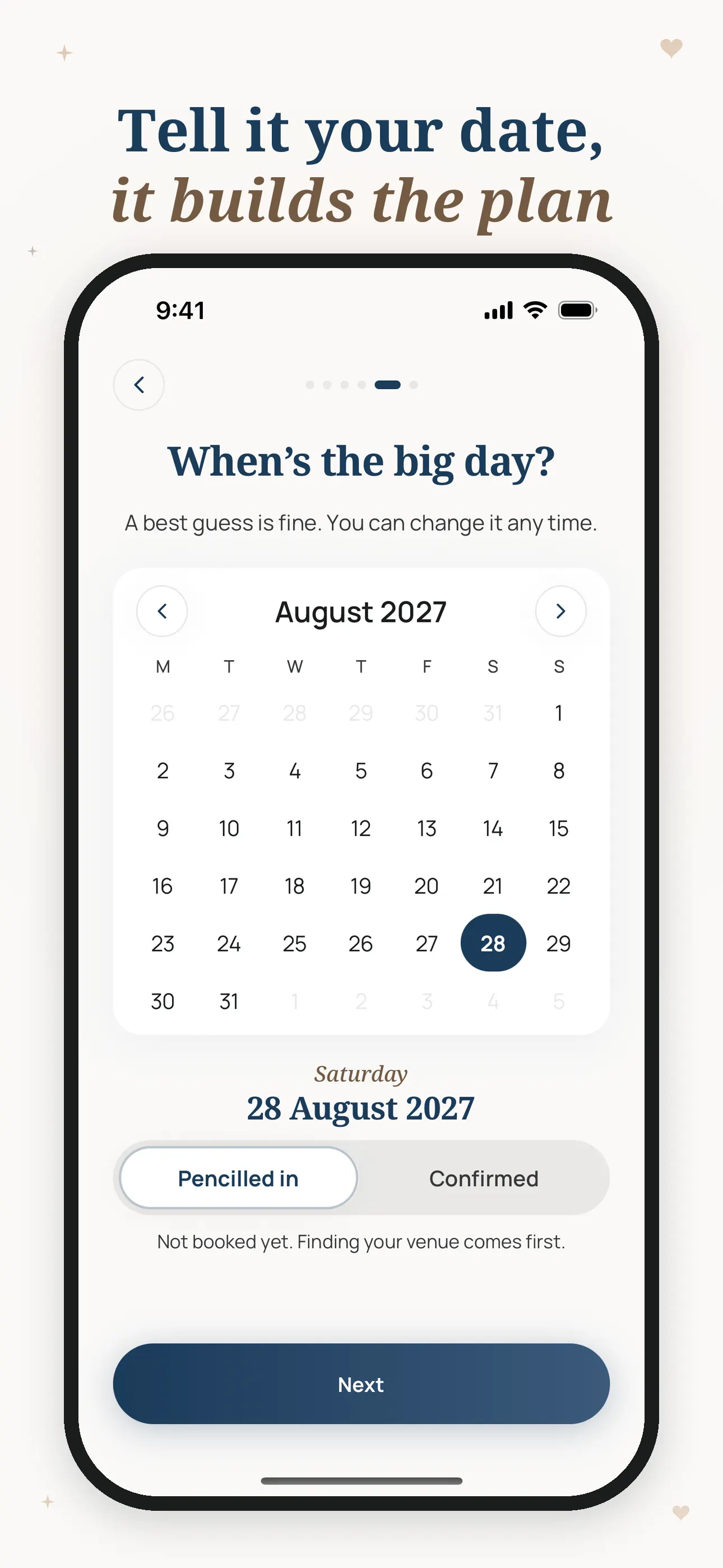
Couples set their date, pencilled in or confirmed, and PlanJolly lays out every task in the right week, from today to the day itself. With four months or less to go, a tighter express plan focuses on what matters most.
2. Two of you, one plan
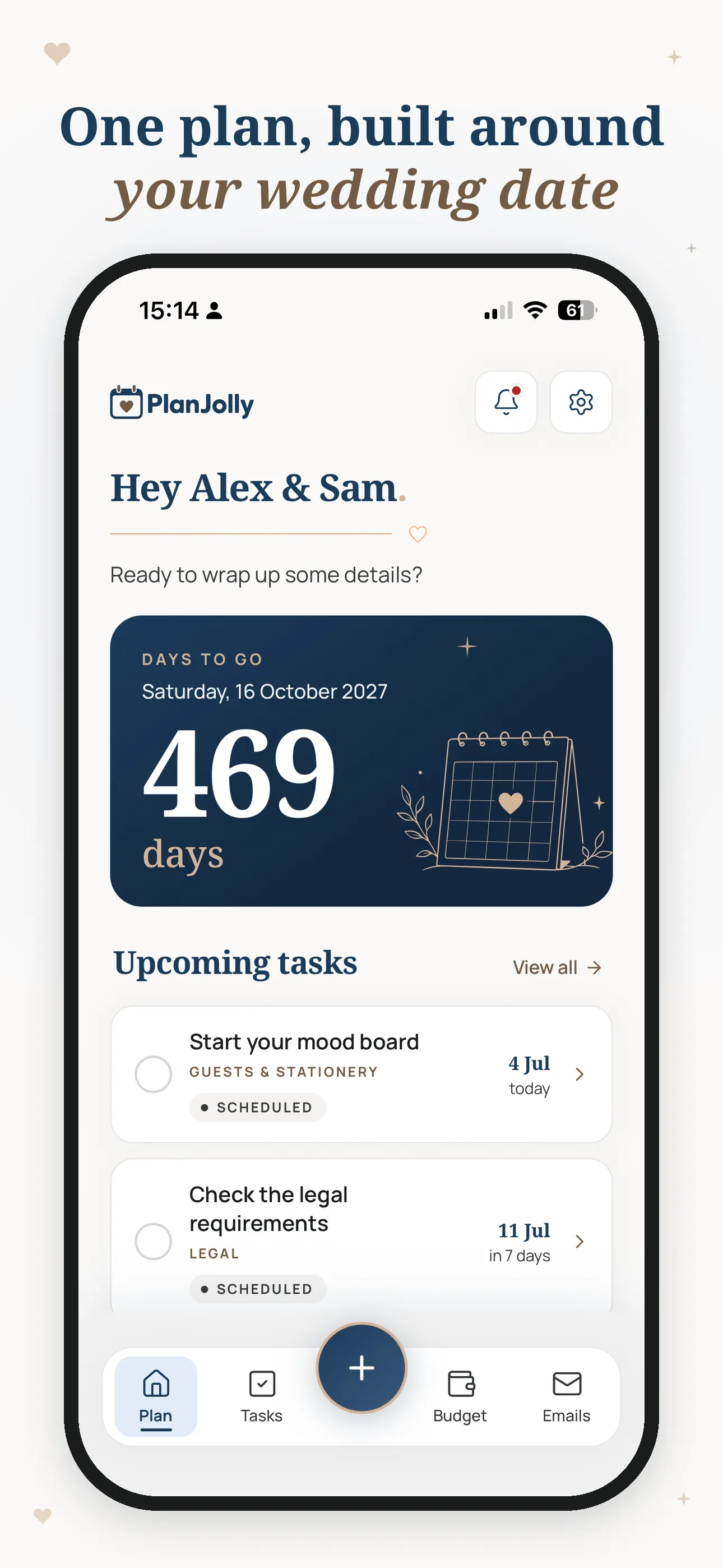
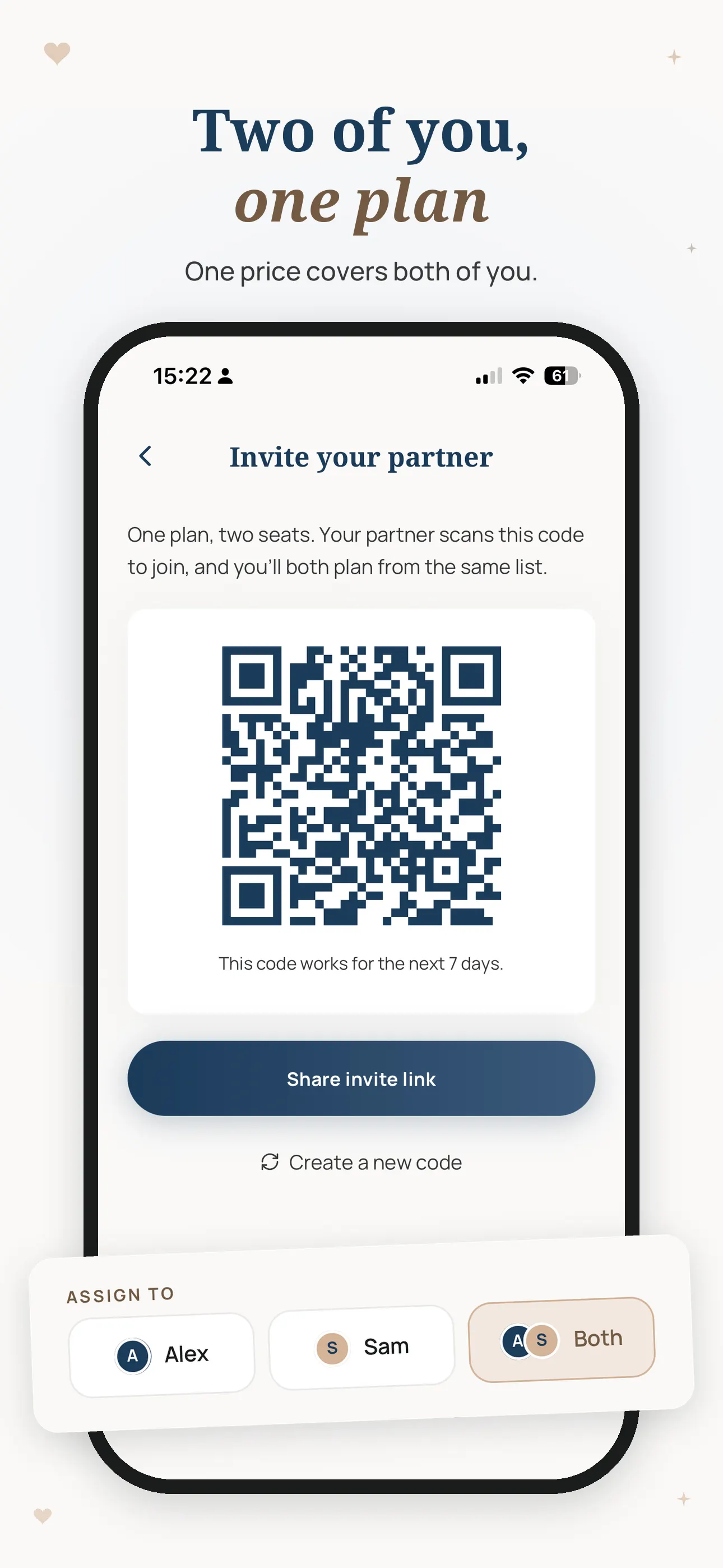
Every plan has two seats at no extra cost. A partner joins by QR code or link, both see the same list in sync, and any task can go to you, your partner or both. One subscription covers the couple.
3. Budget and suppliers in one place
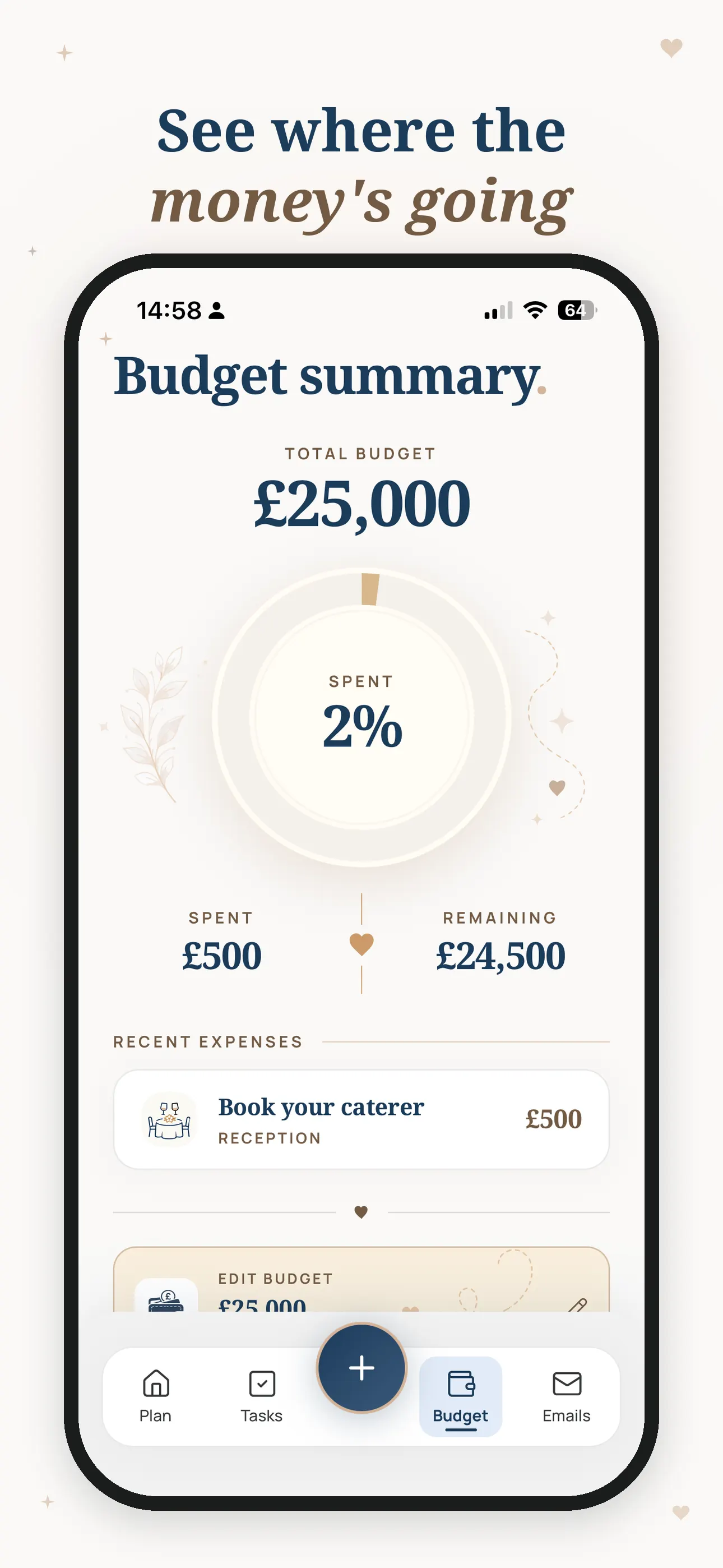
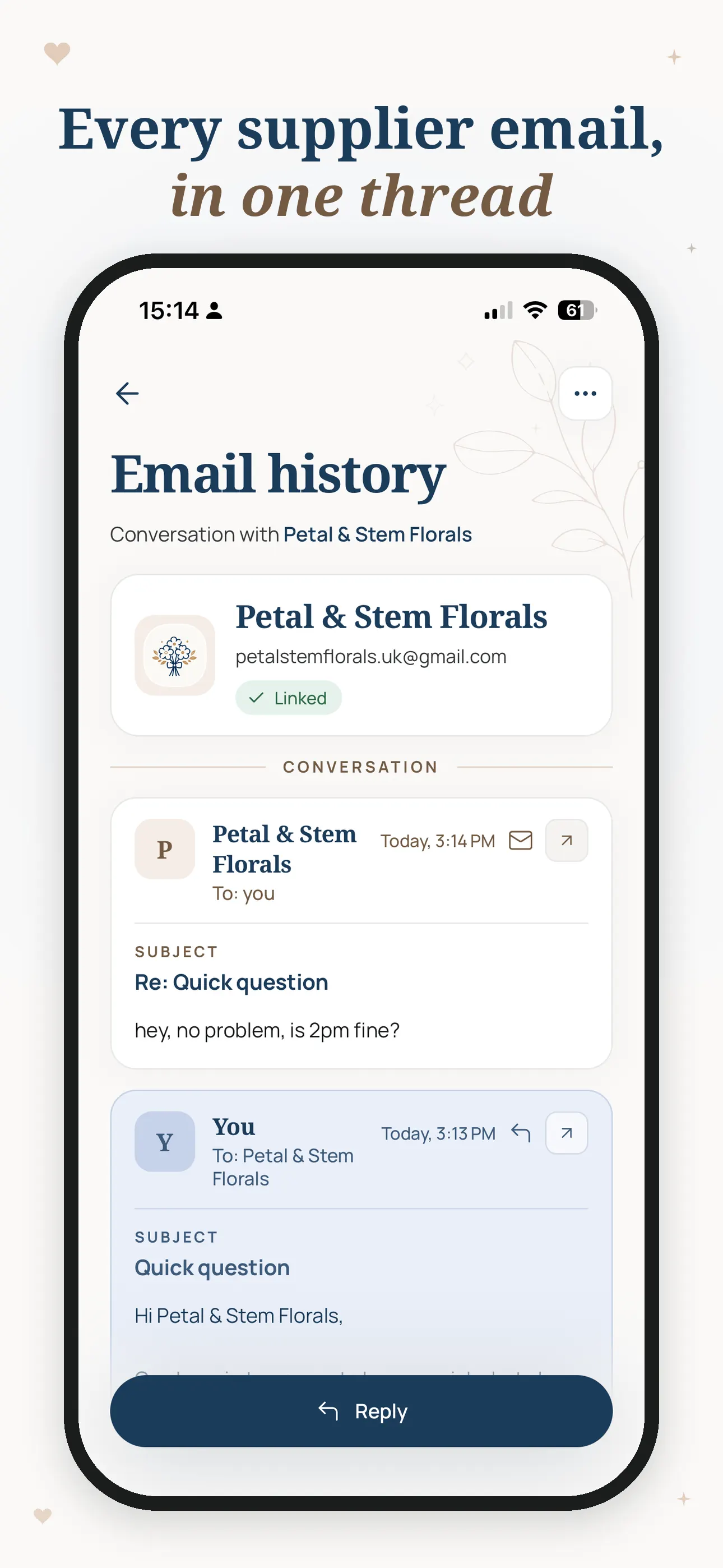
Couples set a total and track spending against it as they add costs to tasks. They can email a supplier straight from the app, and replies come back into the app as one thread, so the conversation sits next to the plan instead of in someone’s inbox.
4. A design system from day one
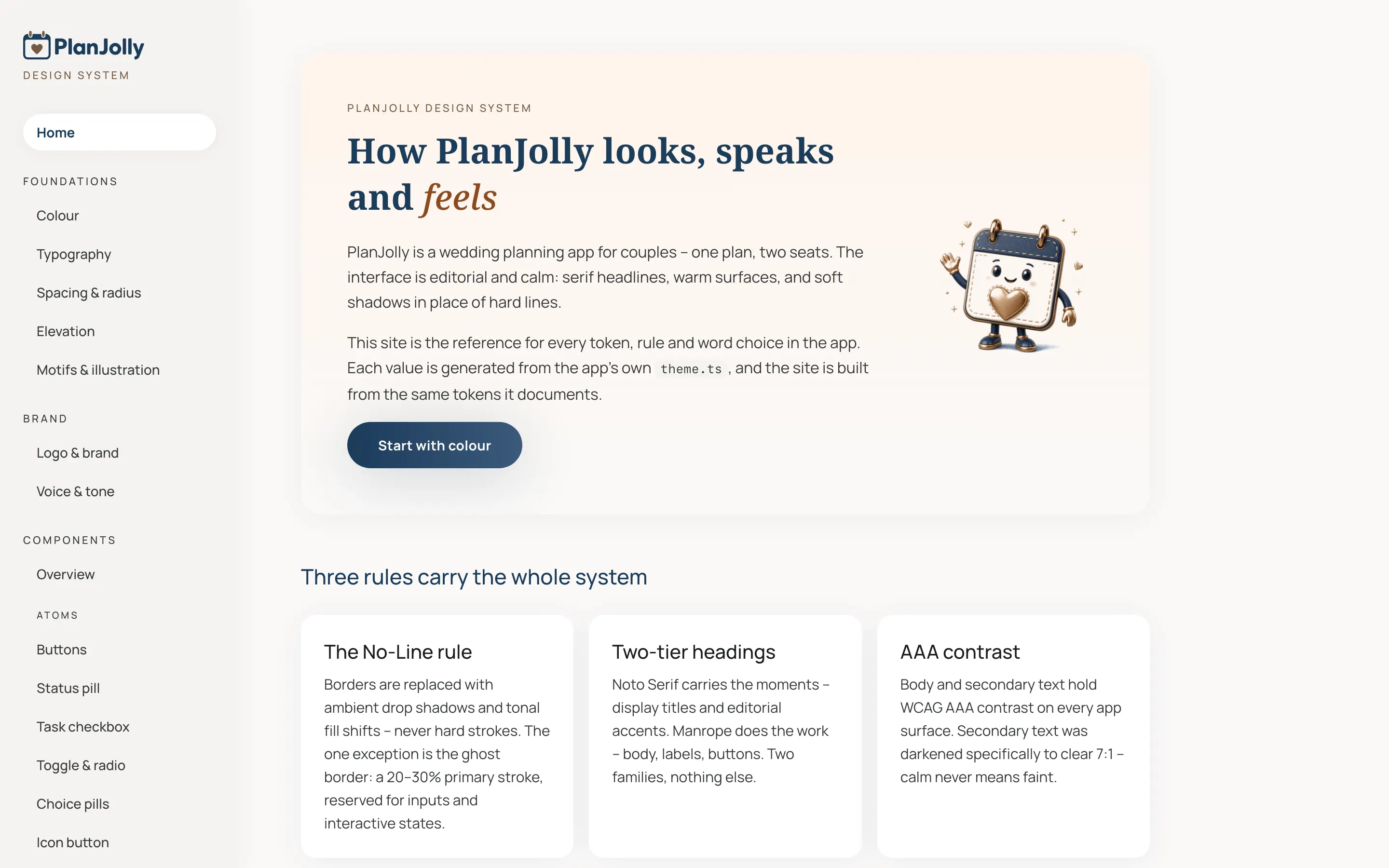
The first build phase was the Expo app shell and the design system foundation together. Every token is generated from the app’s own theme file, so design and code can’t drift apart.
Three rules carry the system:
- The no-line rule. Soft ambient shadows and tonal fills instead of hard borders, for a calm, editorial feel.
- Two-tier headings. Noto Serif for display moments, Manrope for everything else. Two families, nothing more.
- AAA contrast. Body and secondary text meet WCAG AAA on every app surface. Calm never means faint.
5. A voice, written down
I wrote PlanJolly’s voice guidelines before most of the screens: warm but practical, British, plain-spoken, with no hype words and never a feature the app doesn’t have. All in-app copy lives in central files, and every string is checked against those rules, including the accessibility labels.
6. Accessible by default
Every text field is named for VoiceOver and TalkBack, controls have clear 3:1 outlines, and task titles shrink to fit on narrow phones instead of being cut off.
Built with AI agents
PlanJolly is proof of how I work now. One designer with AI agents took a product from the first sketch to two app stores.
- Engineering. An Expo and TypeScript app on a Supabase backend with row-level security on every table, edge functions for email, and RevenueCat subscriptions. Claude Code worked alongside me on all of it.
- Security, checked twice and then externally. Before launch I ran two rounds of multi-agent security audits. The first used 23 agents across eight areas, with every finding checked by agents asked to disprove it, and the second re-checked the app as new features landed. I then had it reviewed by an external security contractor. There were no critical issues, and the higher-priority findings were fixed before launch.
- Scale readiness. Agents audited the live database for indexes and policy performance, so the app scales by configuration rather than a rewrite.
- Localisation, planned AI-first. New languages get an AI first pass guided by the voice rules, with a native speaker reviewing every string before it ships.
Launch
The first commit landed in April 2026, and PlanJolly went live on the App Store and Google Play in the UK on 23 September 2026. Apple’s first review came back with three issues, all fixed and approved within days.
A bridge between two ways of working
PlanJolly started the way I’ve always worked: in Figma. I designed the design system, its variables, the first screens and templates by hand, and connected them to the code through MCP.
Over the months, as the tools moved on, that changed. Working with Claude Code brought design and code much closer together, and sped up everything from research to release.
That’s why this project matters so much to me. It isn’t only that I delivered it end to end, code included. It bridged my old way of working, Figma-led and built on variables, tokens and careful manual design, with a new one. It has changed how I research, design and deliver, and how fast.
Reflection
Building my own product end to end changed how I design for teams. I feel the cost of every design decision in code, in review and in support, and that makes me a more useful partner to engineers and product managers.
It also showed me what AI really changes. The making is much faster, so the craft moves to the decisions: what to build, what to leave out, how it should feel, and whether it’s good enough to ship.
Next for PlanJolly: more markets and languages, built on the same one-app, one-codebase foundation.